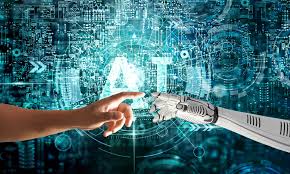
The Future Of AI
The future of artificial intelligence is set to reshape nearly every aspect of human life, bringing both incredible opportunities and complex challenges. AI is evolving from simple automation to advanced systems capable of learning, reasoning, and even making decisions that were once thought to require human intuition. In the coming years, we can expect AI to become deeply integrated into every sector, including healthcare, education, transportation, finance, and entertainment. Imagine medical AI systems that not only diagnose diseases but also predict health risks before symptoms appear, personalized learning platforms that adapt in real time to each student’s needs, or autonomous vehicles that drastically reduce accidents and traffic congestion. Beyond efficiency, AI will play a pivotal role in addressing global challenges, such as climate change, energy optimization, disaster prediction, and scientific research breakthroughs that would take humans decades to accomplish. However, this rapid advancement brings ethical, societal, and economic considerations that demand careful attention. Issues like privacy, job displacement, algorithmic bias, and decision-making transparency will need to be addressed through robust regulation, ethical frameworks, and public awareness. Collaboration between governments, tech companies, and researchers will be essential to ensure that AI develops in ways that enhance human potential without compromising values or safety. Moreover, as AI becomes more autonomous, questions about accountability and control will become central to societal discussions. The future of AI is not merely about technology—it is about how humanity chooses to integrate it responsibly into our lives. Done correctly, AI has the potential to amplify creativity, improve quality of life, and unlock solutions to problems that have long seemed insurmountable. Yet, it will require vigilance, thoughtful policy, and global cooperation to ensure that the benefits are widespread and the risks are minimized. In essence, the coming decades could see AI transform from a tool that assists humans to a partner that complements human intelligence, creativity, and decision-making—if we approach its development with foresight, caution, and a commitment to shared human values.
No Responses